8 Reasons San Juan Belongs on Every Outdoor Traveler's Caribbean Itinerary - Muirt-Rail John
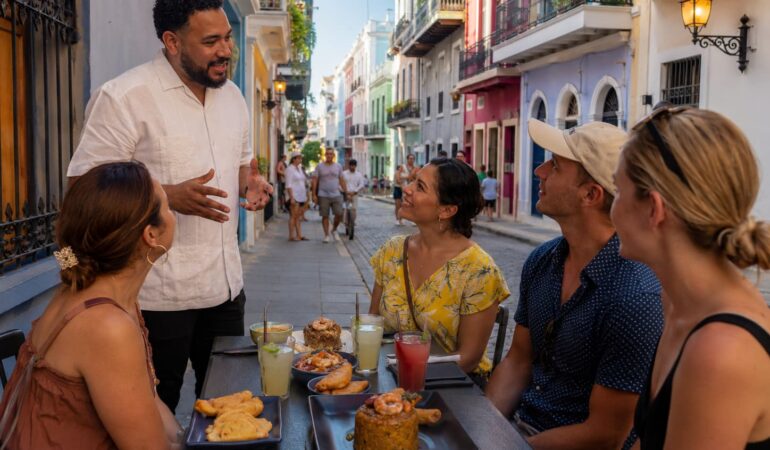

Outdoor travelers who plan their Caribbean trips around trails and nature reserves often treat San Juan the way hikers treat a trailhead town: as a logistical stop between the airport and the wilderness. Get in, resupply, get out. The city is seen as the obstacle between the traveler and the reason they came.
This approach works, but it misses a significant portion of what Puerto Rico has to offer. San Juan is not simply the gateway to El Yunque and the island’s other natural landscapes. It is a destination in its own right, with a food culture that has been shaped by the same forces that shaped the island’s ecology: five centuries of overlapping indigenous, African, Spanish, and North American influences producing something that belongs entirely to the island and cannot be replicated anywhere else. A food tour through Old San Juan and the surrounding neighbourhoods teaches you as much about Puerto Rico’s identity as a day on the El Yunque trails, and the two experiences together produce an understanding of the island that neither can generate alone.
Here are eight reasons San Juan deserves more than a layover.
1. El Yunque Is the Only Tropical Rainforest in the US National Forest System
El Yunque National Forest, about 45 minutes east of San Juan, covers nearly 29,000 acres of Caribbean national forest at elevations ranging from sea level to 3,500 feet on the peak of El Toro. It is the only tropical rainforest managed by the US Forest Service, and it receives more research attention per square acre than almost any comparable forest in the Americas as a result. The forest’s 240 tree species, 16 lizard species, 13 bat species, 50 bird species, and the iconic Puerto Rican parrot, one of the rarest birds in the world, are all accessible on a trail network that ranges from paved family walking paths to serious backcountry routes.
For outdoor travelers whose experience is primarily with temperate national forests and parks, the sensory environment of El Yunque is calibrating: the density of vegetation, the moisture in the air, the sound of the coqui frog, the speed at which the cloud cover drops from the peaks into the forest. The features of US national park tourism that make the system worth studying include this tropical outlier, which gets far less attention than Yosemite or Yellowstone despite being one of the most ecologically distinct units in the entire national forest system.
2. The Food of Puerto Rico Is a Form of Living Cultural Conservation
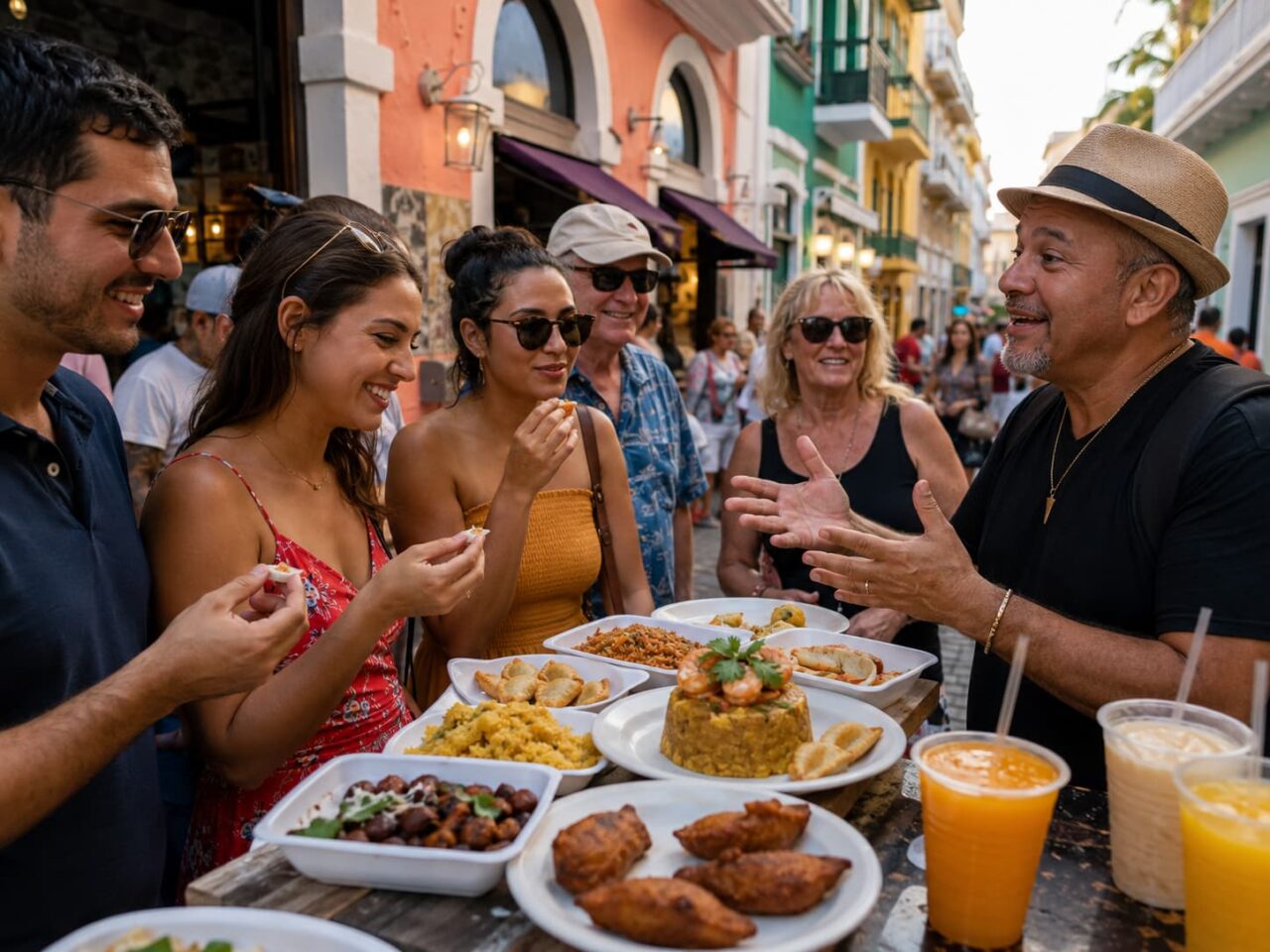
The cuisine of Puerto Rico is the product of the same historical forces that shaped the island’s ecology. The indigenous Taíno people contributed cassava, sweet potato, corn, and a range of tropical fruits. African enslaved people brought okra, plantain preparation techniques, and a knowledge of spice and seasoning that fundamentally altered Caribbean cooking. Spanish colonialism introduced pork, olive oil, sofrito as a base cooking technique, and the rice dishes that now anchor Puerto Rican daily food. North American influence brought canned goods, fast food, and the mainland shopping culture that now exists alongside the traditional food system.
The result is a cuisine that carries its entire history in every plate of mofongo, every pot of arroz con gandules, every cup of caldo santo. Eating this food in San Juan, at the panadería that has been making the same pan sobao since the 1950s, at the frituras stand outside the old city walls, at the restaurant in La Placita that has been feeding the neighbourhood since the 1970s, is a form of cultural archaeology. The community-based food economy of San Juan is as much a form of intangible heritage as the wilderness ecosystems that outdoor travelers come to the island to experience.
3. The Old City Is One of the Best Preserved Colonial Urban Environments in the Americas
Old San Juan, the historic core of the city on a small island connected to the main island by bridges, contains the best-preserved network of 16th and 17th-century Spanish colonial architecture in the United States and its territories. The blue-grey cobblestone streets, the pastel-coloured townhouses, the two massive fortifications of El Morro and San Cristóbal, and the small plazas with their colonial-era churches and fig trees form an urban environment that has been protected as a UNESCO World Heritage Site and that rewards slow exploration on foot.
For ecotourism travelers accustomed to walking slowly through natural landscapes and paying attention to what is there, the Old City offers the same quality of attention rewarded in a built environment. The detail in the ironwork balconies. The way the light falls on the cobblestones at different times of day. The layering of centuries in a single street that runs from a 16th-century fort to a contemporary gallery to a 1950s rum bar. The city reads like a trail with a clear narrative direction and a different kind of biodiversity at every turn.
4. The Mental Health Case for Combining Urban and Wilderness Travel Is Strong
The research on solo hiking and wilderness immersion consistently demonstrates its benefits for mental resilience, stress reduction, and cognitive restoration. But the same research tradition that has documented these effects has also identified that the restoration benefit is strongest when the wilderness experience is preceded and followed by periods of social connection and sensory variety rather than by more isolation. The transition from wilderness to city and back again, done well, produces a more complete restoration than extended wilderness immersion alone.
San Juan, as a base for El Yunque and the island’s other outdoor destinations, provides exactly this structure. A morning on the El Yunque trail network, an afternoon recovering in the Old City with good food and the social texture of a working Caribbean city, and then back to the forest the next morning: this rhythm produces the kind of alternating stimulation and restoration that the psychology of outdoor travel increasingly recommends. Our piece on the psychology of solo hiking and wilderness resilience addresses the mechanisms behind this benefit, and San Juan is the urban complement that makes the wilderness experience more complete.
5. The Food Markets and Street Stalls Are an Ecology of Their Own
La Placita de Santurce, the working market in the Santurce neighbourhood, operates as a produce and food market through the week and transforms into one of the city’s main social gathering spaces on Thursday and Friday evenings, when the stalls stay open late and the surrounding bars spill out onto the square. The market holds vendors selling local tropical fruits, root vegetables, fresh fish from the surrounding waters, and the herbs and spices that form the base of Puerto Rican cooking.
For outdoor travelers who think about ecosystems, La Placita operates like a species-rich forest: each vendor occupies a niche, the interactions between them produce something more varied and resilient than any single stall could generate alone, and the system has been running long enough to have developed the specific character that only comes with age and continuous community investment. The food ecology of a working market like this is worth spending time in for the same reasons that a diverse forest is worth spending time in: both reward patient observation over rapid transit.
6. Guided Food Tours Connect the Neighbourhoods That Independent Visitors Skip
The San Juan that most outdoor-focused travelers see is limited to the airport, the Old City, and the highway to El Yunque. The neighbourhoods where the food culture is deepest, Santurce, Miramar, Río Piedras, Ocean Park, and the residential streets behind the tourist-facing waterfront, require either local knowledge or time that most trail-focused itineraries don’t build in.
Operators like San Juan Food Tours run guided food walks through these neighbourhoods, connecting the city’s panadería culture, its frituras tradition, its restaurant scene, and its market food in a structured experience that covers more of the city’s actual food geography in a few hours than independent exploration typically reaches in a full day. For outdoor travelers who want to understand the island they are hiking on, a food tour through San Juan’s working neighbourhoods provides the human and cultural context that the trails don’t.
7. Puerto Rico’s Bioluminescent Bays Extend the Natural Wonders Beyond the Forest
Puerto Rico has three bioluminescent bays, the highest concentration on any single island in the world. Mosquito Bay on Vieques, Laguna Grande in Fajardo, and La Parguera on the southwest coast each contain dense populations of the dinoflagellate Pyrodinium bahamense, which produce a blue-green bioluminescent glow when disturbed by movement through the water. Kayaking through a bioluminescent bay at night, watching the paddle blade leave a trail of cold light through the water, is one of the natural world’s more unusual experiences.
Fajardo’s Laguna Grande is the closest bioluminescent bay to San Juan, about an hour’s drive east along the coast past El Yunque. The combination of a day in El Yunque followed by an evening in the bioluminescent bay, with the night spent back in San Juan for the next morning’s food tour, compresses an extraordinary range of natural and cultural experience into a three-day itinerary that is logistically simple and rarely assembled in that order by visitors who approach the island as either a beach destination or a single-site wilderness trip.
8. San Juan as a Recovery Base Changes How Outdoor Travelers Experience the Island
Extended wilderness travel accumulates a specific kind of physical depletion that is distinct from ordinary fatigue: the legs are fine, but the sensory appetite for variety, social interaction, and the particular pleasure of eating something prepared by someone else in a proper kitchen, runs high. The best recovery from a multi-day wilderness trip is not rest alone. It is reintegration: into colour, flavour, conversation, and the specific pleasures of a city that knows how to feed people well.
San Juan does this with unusual effectiveness. The Old City in the evening, with the fort walls glowing in the last light and the restaurants and bars in the small streets doing what they have been doing for centuries, offers the kind of sensory reintegration that outdoor travelers recognise as the appropriate closing chapter of a physical trip. The food is the medium through which the transition from the wilderness back to ordinary life happens most naturally. A plate of mofongo made with garlic, plantain, and chicharrón at a small restaurant in the old city is, among other things, the meal that confirms you have arrived back from the forest and that the island is glad you came.
A Final Thought
Outdoor travelers who plan their Puerto Rico trips exclusively around El Yunque and the island’s other natural landscapes are making a version of the same mistake that single-ecosystem ecotourism always risks: treating the human and cultural environment as background noise rather than as a parallel form of biodiversity worth engaging with.
San Juan’s food culture, its colonial architecture, its working markets, its neighbourhood restaurants, and its bioluminescent bays are not distractions from the wilderness experience. They are the context that makes the wilderness legible as part of a living place rather than an isolated green zone surrounded by infrastructure. The island is the whole system. Go hungry for both.
The mofongo will be waiting when you come down from the trail.